
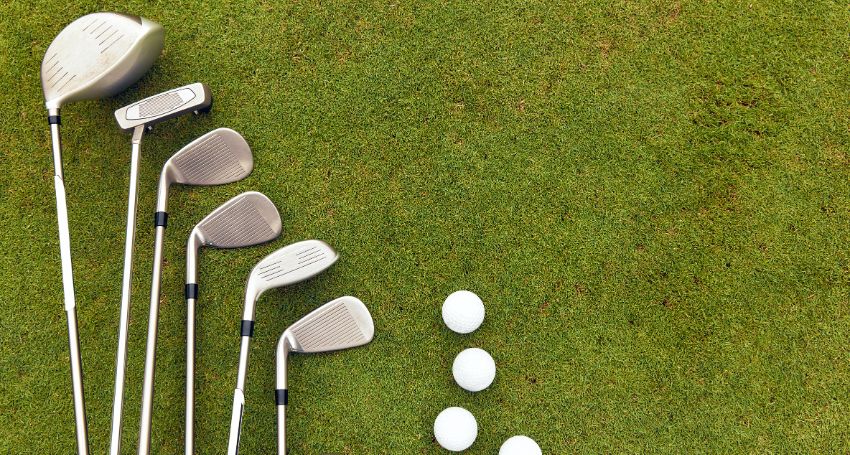
Golf clubs are designed for different shots, distances, and playing situations. Understanding the different types of golf clubs can help you choose the right club for each shot and build a set that matches your skill level.
The main types of golf clubs are woods, irons, wedges, putters, and utility clubs such as hybrids and driving irons. Each type has a different design, loft, distance range, and purpose.
In this guide, we’ll explain what each golf club does, when to use it, and which clubs are most useful for beginners, intermediate golfers, and more experienced players.
What Are the Different Types of Golf Clubs?
The five main categories of golf clubs are:
- Woods – Designed for long-distance shots.
- Irons – Used mainly for controlled approach shots.
- Wedges – Designed for short, high-lofted shots.
- Putters – Used to roll the ball on the putting green.
- Utility clubs – Including hybrids and driving irons, which combine characteristics of woods and irons.
A standard golf bag can contain up to 14 clubs, so golfers don’t necessarily need every club available.
1. Woods
Woods are among the longest golf clubs and are primarily designed for distance. They have larger clubheads and longer shafts than most other clubs.
Types of Woods
Driver:
The driver is generally the longest club in the bag and is primarily used for tee shots on par 4s and par 5s.
Fairway woods:
Fairway woods are designed for long shots from the fairway, rough, or sometimes the tee. Common examples include the 3-wood and 5-wood.
Hybrids:
Although often grouped with woods because of their design and purpose, hybrids are technically a separate category of utility club. They combine characteristics of woods and irons.
For a closer comparison, see our guide to fairway woods vs. hybrid golf clubs.
Best for: Long-distance shots where you need a combination of distance and control.
2. Irons
Irons have smaller clubheads than woods and are designed primarily for accuracy, control, and approach shots.
Traditional iron sets are generally divided into:
- Long irons: 2-, 3-, and 4-irons
- Mid irons: 5-, 6-, and 7-irons
- Short irons: 8- and 9-irons
Long irons generally produce longer shots with a lower trajectory, while shorter irons are designed for more controlled shots and higher trajectories.
When Should You Use Irons?
Irons are commonly used for:
- Approach shots
- Fairway shots
- Shots from the rough
- Controlled tee shots on shorter holes
The correct iron depends on the distance, lie, and type of shot you need to play.
3. Wedges
Wedges are specialized irons with higher lofts. They are designed for short-distance shots where control, trajectory, and stopping power are important.
Types of Golf Wedges
The most common wedges include:
- Pitching wedge
- Gap wedge
- Sand wedge
- Lob wedge
A pitching wedge is commonly used for approach shots, while sand wedges are particularly useful from bunkers. Lob wedges can produce high, short shots around the green.
Learn more about the different types of golf wedges and what each one is designed to do.
4. Putters
A putter is designed to roll the golf ball along the putting green and into the hole.
Putters generally have a flat or relatively low-lofted face compared with other clubs and are designed to provide control over direction and distance.
When Do You Use a Putter?
You normally use a putter when the ball is on or close to the putting green and you want to roll it toward the hole.
Putters come in different head shapes and designs, so factors such as alignment, balance, length, and feel can influence which putter suits a golfer.
5. Utility Clubs: Hybrids and Driving Iron
Utility clubs are designed to provide some of the distance of woods while retaining characteristics associated with irons.
Hybrid Golf Clubs
Hybrids combine features of woods and irons. They are generally easier for many golfers to launch than traditional long irons and can be useful from the fairway, rough, or tee.
They are particularly popular among beginners and higher-handicap golfers who find long irons difficult to hit.
Driving Irons
Driving irons have a more iron-like shape but are designed for longer shots. They can be useful for golfers who prefer the look and feel of an iron but want additional distance from the tee or fairway.
What Is the Difference Between Woods, Irons, Wedges, Hybrids and Putters?
The biggest difference is what each club is designed to do.
| Golf Club | Main Purpose | Typical Use |
|---|---|---|
| Driver | Maximum distance | Tee shots |
| Fairway wood | Long-distance shots | Fairway or tee |
| Hybrid | Distance + forgiveness | Fairway, rough, tee |
| Iron | Accuracy and control | Approach shots |
| Wedge | Short, high shots | Around green and bunkers |
| Putter | Rolling the ball | Putting green |
This is why golfers carry different club types rather than relying on one club for every shot.
Golf Club Components: What Makes Each Club Different?
Every golf club has three primary components:
Shaft
The shaft connects the grip to the clubhead. Shaft material, weight, flex, and length can influence how a club feels and performs.
Common shaft materials include steel and graphite.
Clubhead
The clubhead is the part that contacts the golf ball. Its size, shape, loft, center of gravity, and design affect factors such as launch, forgiveness, and trajectory.
Grip
The grip is where you hold the club. Grip size, material, and texture can affect comfort and control.
How Many Golf Clubs Can You Carry?
Under the Rules of Golf, a player may carry a maximum of 14 clubs during a round.
You don’t have to carry 14 clubs, however. The ideal combination depends on your ability, playing style, course conditions, and the distances you need to cover.
How Many Golf Clubs Does a Beginner Need?
Beginners do not necessarily need all 14 clubs.
A practical beginner set may include:
- Driver
- Fairway wood or hybrid
- Several irons
- One or more wedges
- Putter
A hybrid can be particularly useful for beginners who struggle to hit long irons consistently.
Read our guide on whether hybrid golf clubs are good for beginners for more information.
How to Choose the Right Golf Clubs
Choosing the right clubs depends on more than simply selecting the club that hits the farthest.
Consider:
1. Your Skill Level
Beginners often benefit from forgiving clubs that are easier to launch and control.
Intermediate golfers may want clubs that provide a balance between forgiveness and workability.
Advanced players may prioritize specific launch conditions, feel, shaft characteristics, and shot control.
2. Your Typical Distances
Knowing how far you hit each club helps you create useful distance gaps between clubs.
3. Your Swing Characteristics
Swing speed, tempo, attack angle, and delivery can influence which club and shaft specifications are appropriate.
4. Your Playing Conditions
Golfers who frequently play from thick rough may prefer clubs that are easier to launch, while golfers playing firm courses may prioritize different trajectories and stopping characteristics.
5. Club Fitting
If you’re buying new clubs, a professional fitting can help determine which combination of clubhead, shaft, length, loft, lie, and grip is appropriate for your swing.
You can learn more about golf club fitting before deciding whether a fitting is right for you.
Complete Golf Club Set vs. Custom Golf Clubs
Complete Golf Club Sets
Complete sets are convenient for beginners and casual golfers because they provide the essential clubs needed to start playing without having to select every club individually.
Custom Golf Club Sets
Custom sets allow golfers to select equipment based on their swing characteristics, preferences, and performance goals.
This can include customized:
- Shaft weight
- Shaft flex
- Club length
- Lie angle
- Grip size
- Clubhead design
For golfers considering custom equipment, understanding golf club fitting cost can help determine what level of fitting makes sense.
Which Golf Clubs Should You Use for Different Shots?
There isn’t one club that is automatically best for every golfer or every situation.
| Situation | Common Club Choice |
|---|---|
| Long tee shot | Driver |
| Long fairway shot | Fairway wood or hybrid |
| Long approach | Hybrid or long/mid iron |
| Mid-range approach | Mid iron |
| Short approach | Short iron or wedge |
| Bunker shot | Sand wedge |
| Short shot around green | Wedge |
| Putting green | Putter |
The actual choice depends on distance, lie, course conditions, and the golfer’s ability.
Are Hybrids Better Than Long Irons?
Not necessarily. It depends on the golfer.
Hybrids are often easier for golfers to launch and can provide more forgiveness than traditional long irons. However, some players prefer the trajectory, control, and feel of long irons.
The best option depends on your swing and what you need from the club.
Do You Need All Types of Golf Clubs
No. Golfers don’t need every type of club available.
The goal is to build a set that gives you useful distance gaps and shot options while staying within the 14-club limit.
For example, a golfer who struggles with long irons may replace them with hybrids, while another golfer may prefer a combination of fairway woods and driving irons.
Frequently Asked Questions About Golf Club Types
What are the main types of golf clubs?
The main types are woods, irons, wedges, putters, and utility clubs such as hybrids and driving irons. Each category is designed for different shots and distances.
Which golf club hits the farthest?
The driver is generally designed to produce the longest shots in a golfer’s bag and is primarily used for tee shots.
What is a hybrid golf club?
A hybrid combines characteristics of woods and irons. It is designed to provide distance while being easier to launch for many golfers than traditional long irons.
What are wedges used for?
Wedges are high-lofted clubs used primarily for short approach shots, bunker shots, chips, pitches, and other shots around the green.
How many golf clubs can you carry?
A golfer can carry a maximum of 14 clubs during a round under the Rules of Golf.
Do beginners need all 14 golf clubs?
No. Beginners can start with a smaller selection of clubs that covers their most important distances and gradually add or replace clubs as their game develops.
Which golf clubs should a beginner buy first?
A beginner will generally benefit from a driver, a fairway wood or hybrid, a set of irons, wedges, and a putter. The exact combination depends on the golfer’s ability and preferences.
Final Thoughts
Understanding the different types of golf clubs makes it easier to choose the right equipment for different shots and situations on the course.
Woods provide distance, irons offer control, wedges handle short-game shots, putters are designed for the green, and hybrids and driving irons provide alternative options for longer shots.
You don’t need every club available. The best set is the one that gives you the right combination of distance, control, forgiveness, and consistency for your game.
If you’re unsure which clubs or specifications suit your swing, a professional golf club fitting can help you make a more informed equipment decision.